TCP vs UDP: When to Use What, and How TCP Relates to HTTP
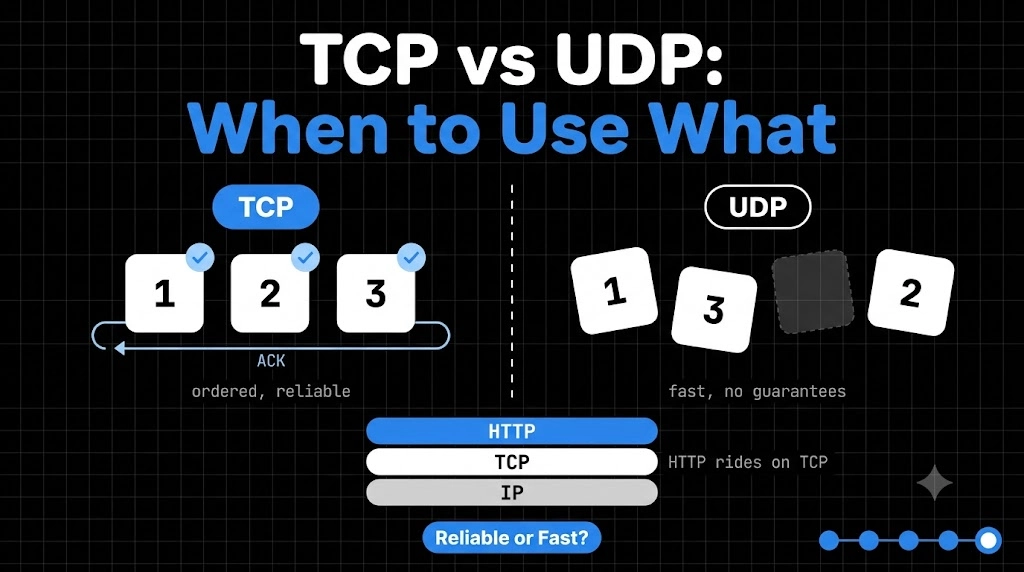
Imagine two computers on opposite sides of the world wanting to exchange data. Without agreed rules, it would be chaos. One side sends too fast, the other can’t keep up, and pieces get lost or jumbled.
So the internet runs on protocols, which are sets of rules for how data is sent. In this blog we’ll look at two main ways to send data (TCP and UDP), and then clear up one of the most common beginner confusions: how HTTP fits in.
What are TCP and UDP?
Both are transport protocols. Their job is to carry data from one computer to another. They just do it in very different ways.
TCP is safe and reliable. It makes sure everything arrives, in order, and correctly.
UDP is fast but risky. It sends data and doesn’t check if it arrived.
The Analogies
TCP is a phone call. You dial, the other person picks up, you confirm you can hear each other, and you talk. If you miss something, you say “sorry, can you repeat that?” Nothing is lost.
UDP is a public announcement. The speaker just talks into the microphone. If you were in the toilet and missed it, too bad. Nobody repeats it.
Another way to see it: TCP is a courier who gets your signature on delivery, while UDP is a live broadcast that keeps going whether or not you’re watching.
Key Differences
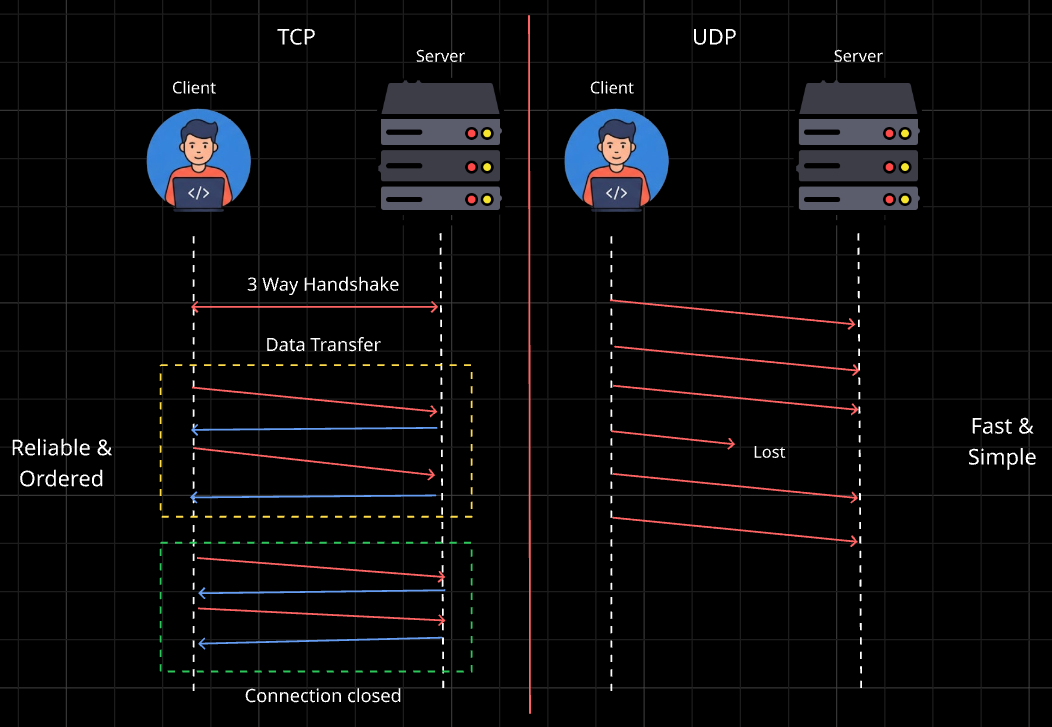
Connection: TCP sets up a connection first (the handshake). UDP just starts sending.
Reliability: TCP resends lost data. UDP doesn’t.
Order: TCP delivers data in the correct order. UDP may arrive jumbled.
Speed: UDP is faster because it skips all the checking. TCP is slower because of the extra work.
Overhead: TCP carries more bookkeeping. UDP is lightweight.
In short: TCP trades speed for safety, and UDP trades safety for speed.
When to Use TCP
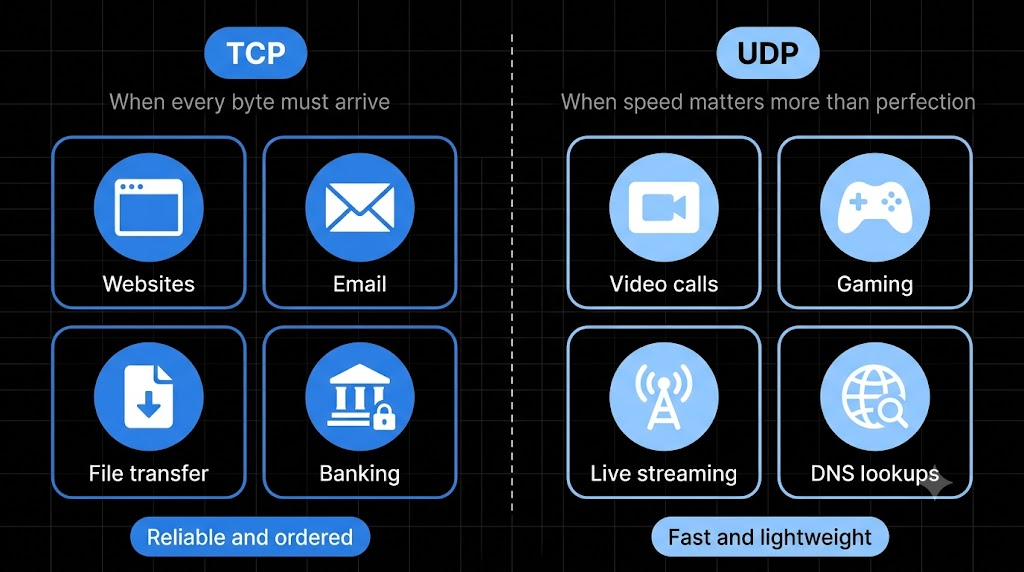
Use TCP when every piece of data matters. If something is missing, the whole thing breaks.
Websites, email, file downloads, and banking are all good examples. Imagine a webpage with missing chunks of code, or a bank transfer where half the message vanished. Nobody wants that.
When to Use UDP
Use UDP when speed matters more than perfection, and a small loss is acceptable.
Live video calls, online games, and live streaming are the classic examples. If one frame drops in a video call, you barely notice. But if the call paused to resend an old frame, you’d get awkward lag. In a game, the player’s position from half a second ago is useless, so there’s no point resending it.
DNS lookups also typically use UDP, because the questions and answers are tiny and fast.
What is HTTP?
Now for the confusing part. You’ve probably heard of HTTP, the protocol behind every website. But is it the same as TCP?
No. HTTP is an application-level protocol. It defines what the browser and server say to each other: “GET me this page,” “here’s the page, status 200,” and so on. It’s about the message and its meaning.
TCP is a transport protocol. It decides how those messages travel safely across the network.
HTTP Runs on Top of TCP
Think of them as layers, stacked like this:
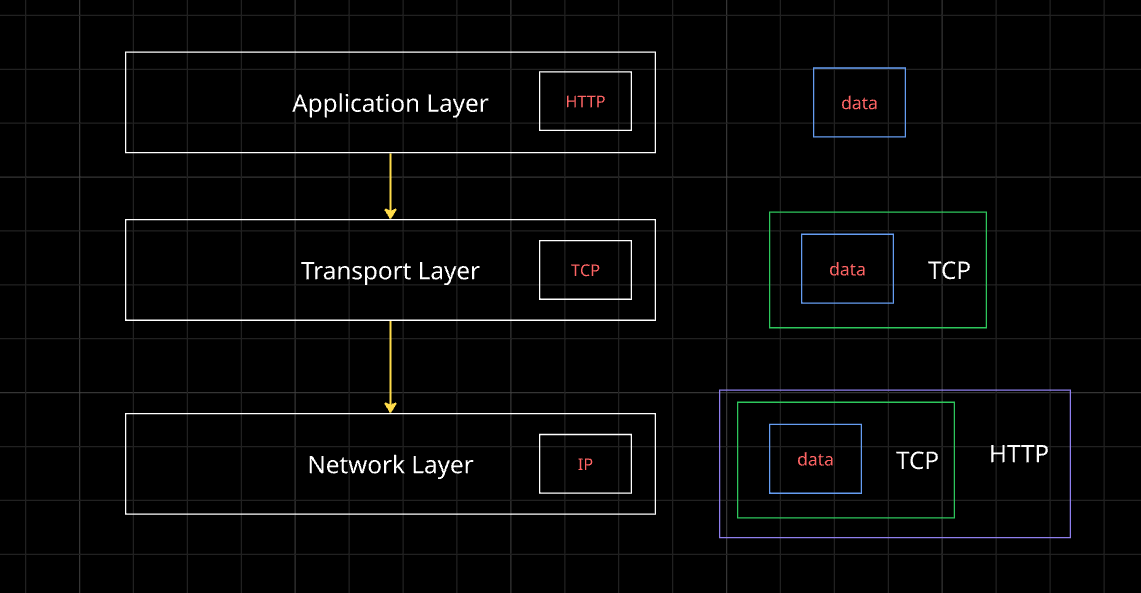
Think of sending a letter. HTTP is the letter you write. TCP is the registered post service that makes sure it arrives. They’re different things, and you need both.
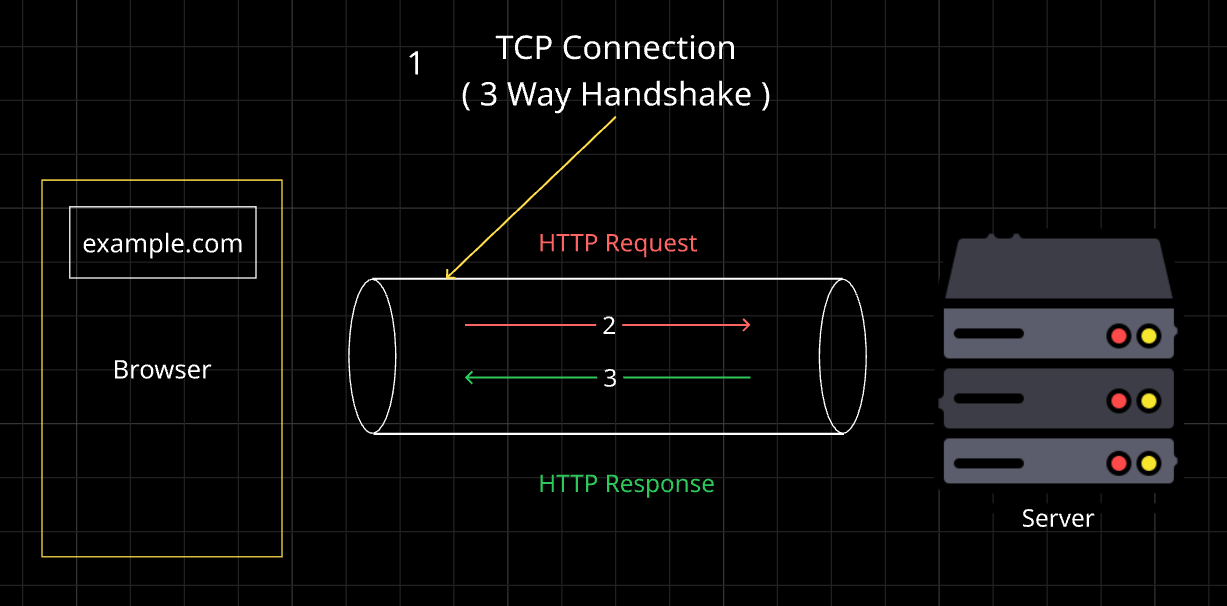
How an HTTP Request Flows Over TCP
When you open a website:
Your browser opens a TCP connection to the server (the handshake).
It sends an HTTP request through that connection.
The server sends back an HTTP response, also through that connection.
TCP makes sure all the pieces arrive intact and in order.
Why HTTP Doesn’t Replace TCP
HTTP has no idea how to handle lost packets, ordering, or retransmission. That’s TCP’s whole job. HTTP simply assumes that whatever it sends will arrive safely, because TCP is quietly working underneath.
So when someone asks, “Is HTTP the same as TCP?”, the answer is: no, HTTP runs on top of TCP. (One small note for later: newer versions of HTTP, like HTTP/3, actually run over a UDP-based protocol called QUIC, but for now, “HTTP runs on TCP” is the right mental model.)
Wrapping Up
The internet needs rules, and these are three of the big ones. TCP is a careful phone call that guarantees delivery. UDP is a fast announcement that doesn’t look back. HTTP is the language websites speak, riding on top of TCP.
Pick TCP when accuracy matters, UDP when speed matters, and remember that HTTP and TCP are partners, not the same thing.
Comments
Join the discussionNo comments yet. Be the first to comment.
Networking Basics
How does the internet actually reach your code? This 6-part beginner series covers network devices, DNS, DNS records, TCP, TCP vs UDP, and hands-on testing with cURL.